-
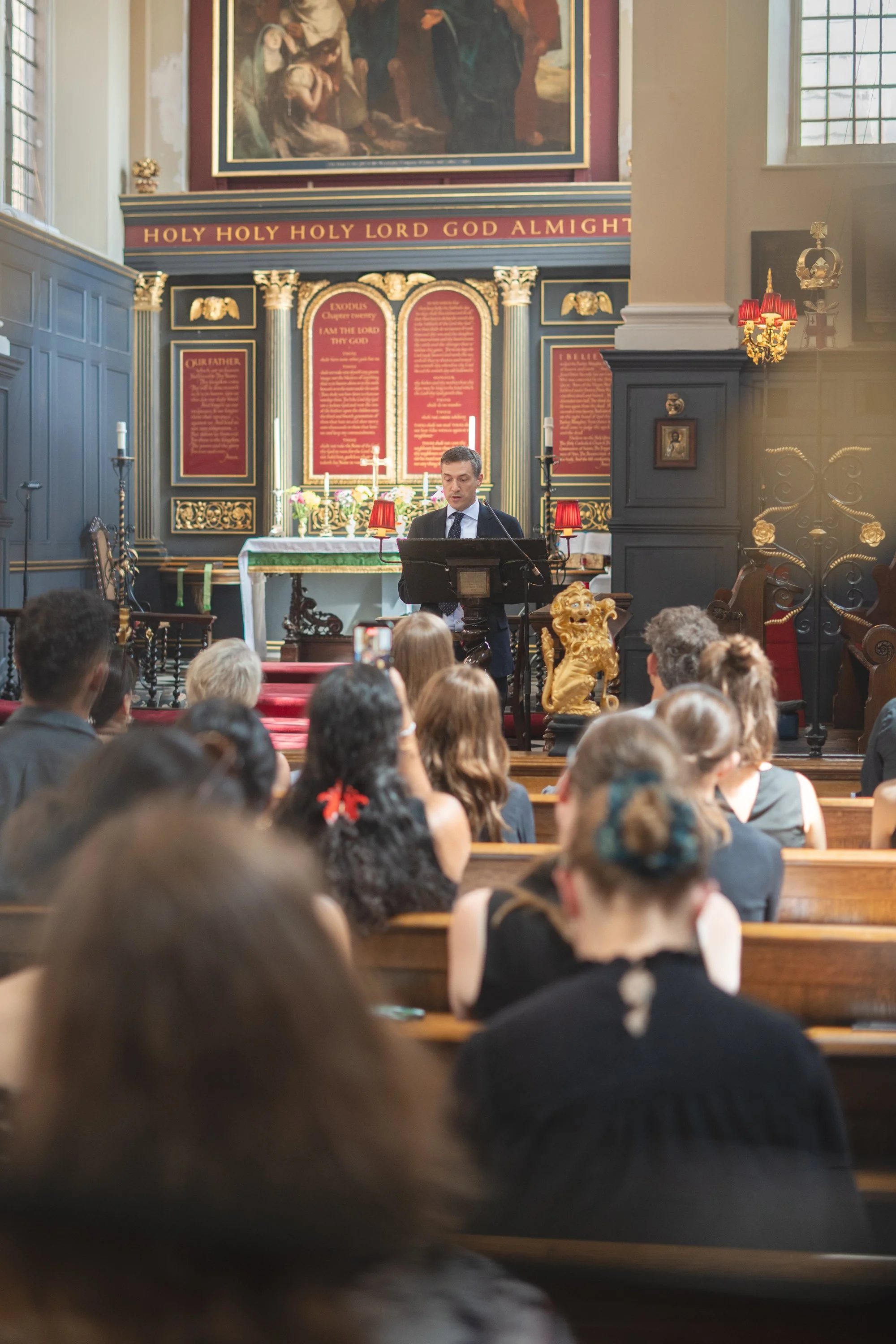
We are here today to say goodbye to the food system as we have known it.
I speak as a farmer. And as a farm, we spend much of our time working the land, watching the weather, worrying over the soil, caring for animals, and trying, season after season, to produce good food honestly.
But if I am honest, this has not been a sudden death. It has been a slow decline.
A slow drifting away from what a food system ought to be.
Because surely a food system should do more than move products from one place to another. It should nourish people. It should support those who grow the food. It should care for the land, the water, and the living things it depends on. It should leave something worth handing on.
Too often, this one has done the opposite.
It gave us more and more food that was expected to be cheaper and cheaper, while asking the land and the people to carry the cost. It rewarded volume over value, speed over care, and short-term gain over long-term health.
And we have felt this strain in many ways.
We have felt it in the pressure to produce more for less, even though in reality food prices are dishonest and do not reflect the true cost of the impact on people and the environment.
We have felt it in the loss of farms, the thinning out of rural communities, the tiredness in people who love this work but are no longer sure it loves them back.
We have felt it in the quiet changes too - fewer birds, poorer soils, less resilience when the weather turns against us.
And still, we kept going.
Because that’s what the farming community does. They keep going. We mend, we adapt, we endure. We plant without certainty. We work with nature. We trust that our ongoing stewardship on our landscape still matters.
So I do not stand here today only to mourn. I stand here to tell the truth.
And the truth is that not everything that ends should be saved.
Sometimes something has moved so far from its original purpose that the kindest, wisest thing is to let it go. Sometimes what dies is not the thing we truly needed, but the thing that stood in its place for too long.
Food itself is not what we are burying today. Nor farming. Nor the human need to feed one another well.
What we are laying down is a way of thinking. The idea that food should be cheap at any cost. The idea that land is only there to be pushed harder. The idea that efficiency matters more than resilience, or that productivity matters more than nourishment, or that those who produce our food can simply be squeezed a little more each year and continue to endure.
That is what I believe has run its course.
And while there is sadness in that, there is also relief. Because every farmer knows that endings are not always failures. Sometimes they are necessary. Sometimes a field needs resting. Sometimes old growth has to be cleared. Sometimes what no longer works must be broken down before something better can begin.
So perhaps this is not just a funeral.
Perhaps it is also a chance.
A chance to begin again with a little more humility. A little more honesty. A little more respect for the fact that food does not begin in a factory or on a shelf. It begins in the living world.
It should value healthy land, not treat it as expendable. It should make room for farmers to farm well, not just to survive. It should recognise the true worth of food - not only in price, but in what it takes to produce it, and in what it means to the lives it sustains.
It should be a system that is productive, yes - but also resilient. Efficient, yes - but also fair.
As a farmer, I do not believe in perfect systems. Farming cures you of that idea quickly. There will always be risk. There will always be uncertainty. There will always be hard seasons.
But I do believe in better.
Better care for land. Better reward for labour. Better food. Better connection between those who grow and those who eat. Better chances for the next generation to stay on the land with dignity and hope.
That is why I do not leave this moment feeling only grief.
I leave it with the kind of hope farmers understand best - not the easy kind, not the foolish kind, but the practical kind. The kind that knows renewal takes work. The kind that knows nothing changes overnight. But knowing how quickly nature can bounce back.
So yes, today we say goodbye to the food system as we have known it.
But we do not do so empty-handed.
We do so carrying knowledge, experience, and the chance to build something better in its place.
And if we are willing to learn, willing to care, and willing to begin again, then perhaps what comes next will be more rooted, more fair, more humane, and more alive than what we leave behind.
That, at least, is worth hoping for.
-
We are gathered, then, to bury it -
The food system that fed us, and yet could not be fed.
Let us be fair before we are final.
It worked a kind of miracle:
Strawberries in February, bread for the price of pennies,
shelves so full we thought hunger was a memory,
abundance you could carry home in a thin plastic bag.
It freed a thousand hours no longer spent
bent in a field, and handed them back to us.
It was, for a while, a wonder.
But it learned to reduce the harvest to a number,
to trade the wheat before the wheat was grown,
to fold variety into four hands,
to call the soil an asset, and draw it down.
It priced the apple and forgot the orchard.
It sold us cheapness, and posted the true bill
downstream — the topsoil washing away, field by field,
the ledger always balancing somewhere else.
In the forest, the river, the clinic, the child…
A false economy: the cheapest things cost the most,
Paid later, paid by others.
And here is the turn — it sowed the seeds of its own end.
What you mine, you do not keep.
What you hollow, eventually falls.
It borrowed against a future it would not see,
and the future, in the end, came round to collect.
No villain pulled it down. It simply spent
the ground it stood on, and the ground gave way.
And here we are. The system - now spent - has lain down.
But look… already, in the broken-open earth,
small things. Many things. Rooted, local, slow.
Farms - places again, not a sector.
Markets - full of people, not numbers.
Fields fed - as much as they feed us.
A commons, nurtured, nourished.
Not one supersized edifice - but a thousand gardens.
Not bouncing back — bounding forward — into something
that knows its real value, and shares it as it goes.
The old king is dead. We will not mourn him long.
Listen: that sound you can hear?
The new world, coming to life.
-
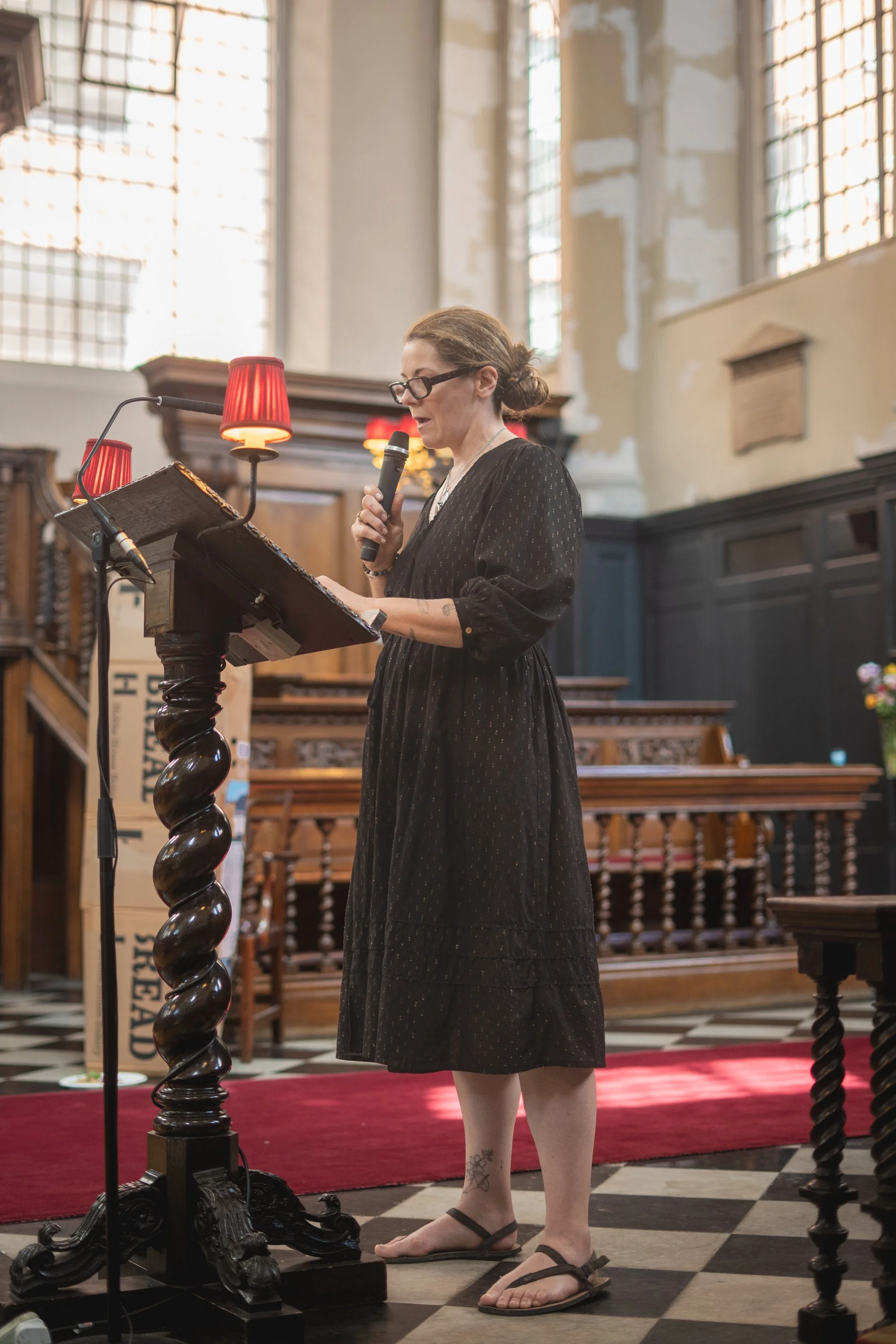
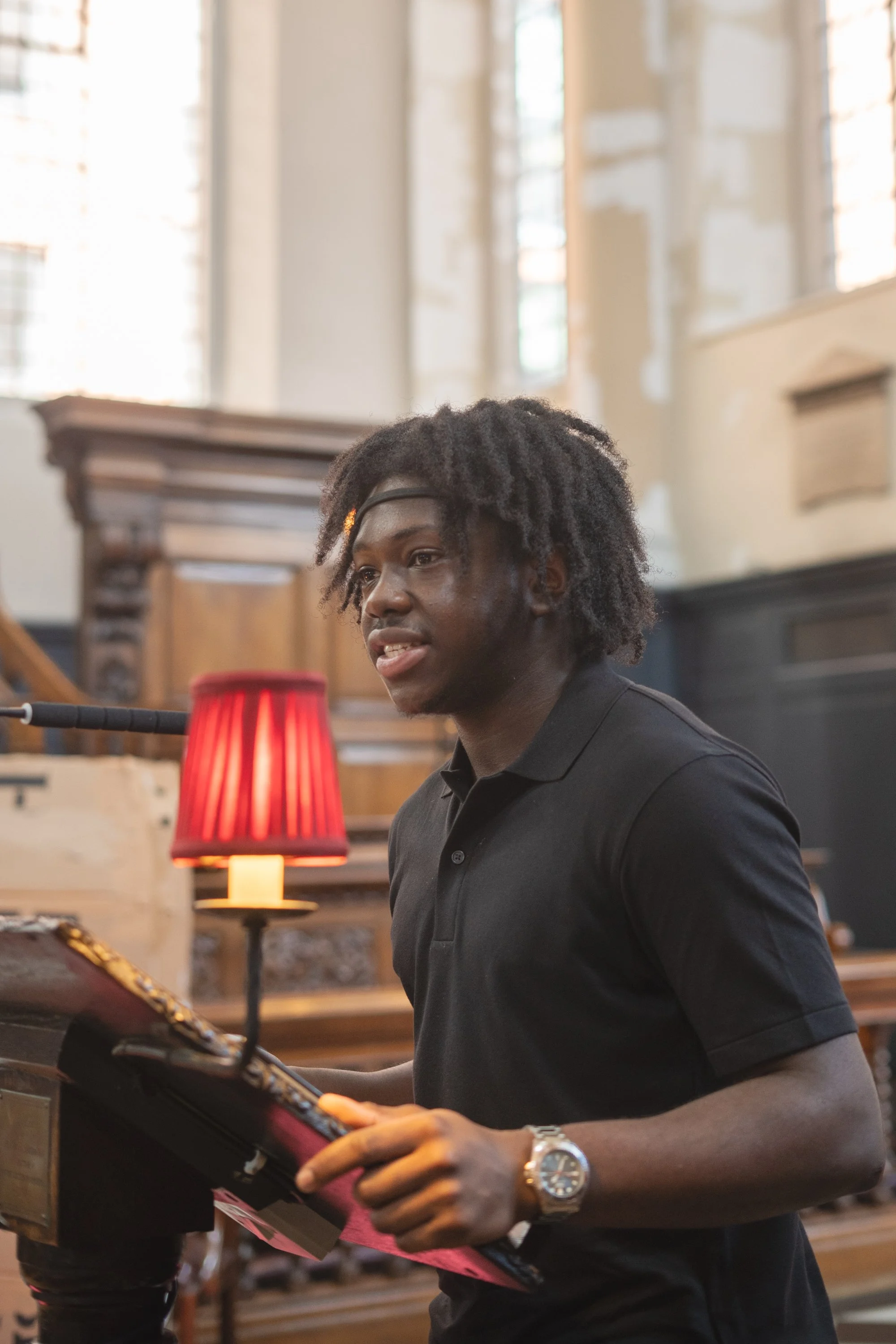
Hi, I’m Farid, 18 years old from Manchester. I’m a youth activist with Bite Back; the movement fighting to protect children’s health. There’s so many of us across the country that wanted to be here today, but couldn’t make it. So I’m here to speak about the passing of our food system.
And I want to start by saying that, whatever your opinions are of our food system (or Foodie to his friends), they have played a major part in our lives. For good or for bad.
So, if I had to describe my relationship with Foodie in one word… it would be turbulent.
Me and the food system go way, way back. My first memories are just that I remember them being there all the time. Way back from when I was a kid trying to find a filling meal at school, all the way through to being a young adult trying to find a healthy option on Manchester’s high streets.
To be fair– they were always there for me… even when sometimes I wish they weren’t: When I was trying to hang out with friends, Foodie was always nearby. When I was playing football at a youth academy, I’d see Foodie sneak in there too. The hospital, the park, even when I was playing with my younger brothers before school, somehow we’d met Foodie before we even got to registration.
So it’s safe to say we’ve got plenty of memories together. It wasn’t always pretty. You might have seen on Bite Back’s social media that we even had some public falling outs — sorry if any of you got caught in the middle of that!
I think we’ve all had moments where we’ve realised what’s around us isn’t matching the future we want to see: not for our generation nor the younger ones after us. And I think that’s why me & Foodie didn’t see eye to eye sometimes.
We were just on different paths — I was just trying to live a fun and active childhood, but it felt like Foodie was working against me. Even if they said otherwise: They’d always say they just ‘wanted me to be happy’, but it felt more like… they were more focused about trying to find out where I was – and take my lunch money.
Foodie said they always cared about children, but I think they just had an interesting way of showing it. But I know Foodie wasn’t born bad, they just got caught up with the wrong crowd: Corporate Types.
I guess that’s why I had to take a [commercial] break from our relationship!
But after all is said and done, it’s great to come here today and celebrate a long life lived, and a new one beginning. Foodie was around since before I got here, and I had hoped they’d still be here after me, and that one day they’d be the better person that they wanted to be.
What I’ll miss about Foodie the most is that they had a gift for bringing people together, even if the reasons were questionable sometimes.
But we all have that one friend don’t we? And, no matter what I said, he’d always try to take it on the chin, and pretend I hadn’t said anything at all.
Jokes aside, we had a good run. And I’m a big believer that: things are only in your life for as long as they are meant to be. With Foodie gone, it’s hard to think about our future, but it’s also exciting. An exciting opportunity for something new and great.
For so long, I thought this was just how things would be — broken. But now there’s space to meet somebody new and inspiring, one that protects our future.
We’ve seen the old way things were done: what happens when big food corporations are allowed to constantly target us with unhealthy food and pollute our planet. Now we can meet someone that can change that and put the health of children first.
We can create a world together where healthy food in schools that helps us learn and grow, is the bare minimum.
A world where the food that’s being put in the spotlight, is food that is delicious and has our best interests at heart.
A world where the health of our people & our planet is a priority, not an afterthought.
And although foodie has died today, they say nobody truly leaves us behind if we take the best parts of them forward
So lets use this as a moment not to say goodbye, but to remember.
To remember what foodie got right. To learn from what he got wrong.
And use this as a second chance to take on some of the good Foodie left in the world and build something even better
Imagine a world where we could turn the tide, and change how we think about our food environment and children’s health — for good.
Can you see that world? Because I can.
And finally – wherever Foodie is, I hope they know one thing. For all our disagreements, seeing the people around you that tried to help you be better, gave me such a powerful thing: hope.
RIP Foodie
-
Beth’s Turnip & Turmeric Cake – serves 12
I’m a huge fan of turnips. A humble root, it is often considered the reject of the veg box, historically fit only for consumption by those down and out or used as animal feed. This unsung hero who I feel a compulsion to champion, can grow in mineral poor soil, is rich in vitamin C and produces edible greens sprouting forth and ready to nibble within weeks of sewing.
I’ve developed quite an affinity with this veg, perhaps because it is rooted in the heart of why I love to cook and feed people. It’s a simple and essential way to show you care, to connect with your tribe and to unite over what makes us all human. It is working with what we have and making the best of it. It is celebrating the simpler pleasures and not wanting for more. It is moving in harmony with the natural world, not pushing against it. That might seem quite a grand concept to glean from a turnip, but that’s how I see it.
So of course, I had to sneak turnip into a cake. The first time I served this bake, I didn’t mention the ingredients until after it had been sampled so that it was judged on taste alone, not by a weird vegetable I’d snuck into it, because that’s what I do. It was a great success. The banana adds a lovely moistness to the cake and goes surprisingly well with turnip. The creamy frosting and zingy crunch of turmeric and pumpkin seed topping bring it all together in a holistically indulgent fashion.
Afterall, if you can slip a carrot or a courgette into your sponge, why not a turnip?
Ingredients
For the cake…
1 banana, mashed
125ml olive oil
150ml milk
150g brown sugar
2 eggs
300g self-raising flour
½ tsp ground nutmeg
½ tsp ground cardamom
Pinch of salt
100g turnip, peeled and coarsely grated
For the toppings…
100g butter, softened
200g icing sugar
50g cream cheese
Thumb of fresh turmeric, very finely sliced
Handful of pumpkin seeds
1 tbsp butter
1 tbsp maple syrup
Pinch of salt
What to Do
Preheat the oven to gas 5/190°C and grease and line a 9x9 inch tin.
In a large bowl and using a hand whisk, combine the mashed banana, oil, milk, sugar and eggs for about a minute then add the flour, nutmeg and salt into a smooth batter. Fold through the turnip then turn into the tin and bake for 45 minutes. Allow to cool completely before topping.
For the icing combine the butter and icing sugar with an electric whisk to make it wonderfully light and fluffy. Slowly fold in the cream cheese being careful not to over stir as it can go a bit sloppy. You can chill in the fridge for a bit if it does go a little loose.
For the sprinkly top bits pop the remaining ingredients into a small pan and fry on medium heat for a few minutes. You want them slightly caramelised and crispy to give the cake some texture.
Top the cake with icing, sprinkles and serve with a nice cup of tea.
-
We gather today to mark the passing of something so vast and familiar that many scarcely noticed it was disappearing until it was gone: the global food system as we once imagined it.
For generations, it promised something extraordinary. It promised that human ingenuity could feed a growing population. It promised abundance, efficiency, and security. In many ways, it delivered. Never before had so much food travelled so far, reaching so many people.
And yet, today we stand not only to celebrate what it achieved, but also to acknowledge what it became, and what it failed to protect.
I would like to remember it through three reflections.
First, we mourn the loss of resilience.
The system pursued efficiency with remarkable determination. Fields grew larger, supply chains stretched longer, and production became increasingly specialized. Food became cheaper, faster, and more abundant.
But in the process, resilience was often traded for efficiency. Diversity gave way to uniformity. Local capacity weakened as dependence on distant suppliers grew. When droughts struck, when conflicts erupted, when pandemics disrupted trade, we discovered how fragile abundance could be.
We mourn not because efficiency is wrong, but because resilience was undervalued until its absence became impossible to ignore.
Second, we mourn the loss of connection.
Food is more than a commodity. It is culture, memory, identity, and relationship. It connects people to landscapes, seasons, communities, and one another.
Yet over time, many of us lost sight of where our food came from, who produced it, and what it cost in human effort and environmental resources. Farmers became invisible. Ecosystems became externalities. Meals became products.
The tragedy was not merely that food traveled thousands of miles. It was that the stories behind it disappeared from view.
We mourn the weakening of that connection between people, place, and sustenance.
Third, we mourn the loss of balance with nature.
The global food system achieved extraordinary productivity. But too often, that productivity was financed by drawing down natural capital: soils depleted faster than they were restored, freshwater consumed faster than it was replenished, biodiversity diminished in the pursuit of greater yields.
Nature was treated as an input rather than a partner.
For a time, this seemed like progress. But eventually the bill arrived—in climate instability, ecological decline, and growing uncertainty about the future of food itself.
We mourn a system that forgot that long-term prosperity depends upon living systems that can endure.
And yet, every eulogy contains a lesson for the living.
The purpose of remembering the dead is not simply to grieve. It is to decide what should be carried forward.
From the global food system, we inherit remarkable achievements: scientific innovation, agricultural knowledge, international cooperation, and the ability to nourish billions of people.
What we leave behind is the belief that efficiency alone is enough; that food can be separated from people and nature without consequence; that abundance without resilience can last forever.
So today we do not merely say goodbye.
We commit ourselves to building something better: a food system that values resilience alongside efficiency, connection alongside convenience, and stewardship alongside production.
May we learn from what has been lost.
May we honour what was achieved.
And may the next generation inherit not only enough food, but a food system worthy of sustaining both people and planet. -
A Eulogy and Elegy (or Elegiac Eulogy) for the Food System
For the ancient Greeks, the direction and tone of eulogies was set by the ‘eu’ prefix that in Greek means good. Elegies are mourning. Eulogies are the positive reflection.
Objectively, the food system warrants both moral pitches – recognition of the good and the bad; the retained, the missed and the ‘glad-to-be-rid-of’ features.
We critics need to remind ourselves that there is much good not just bad about today’s food system. I prefer the language of messiness to the good or bad
Part of understanding the messiness is to appreciate the high moral purpose of food.
The food system is so vast, so complex, such a basic strand of the political economy that we cannot reduce it to good or bad or to a few decades.
Nuances are required alongside the final moral arithmetic.
But also, we have to recognize that fine post-WW2 intentions to feed everyone by producing more food have gone seriously wrong.
All historians agree the food system has gone through major periods. Raw nature. Hunter-gathering. Emergence of settled farming. Then large land-holdings (plantations, estates, ranching). Imperialism/colonialism. Global trade. Rampant consumerism. Reborn aid closure. Stand on your own regionalism. Rebrutalised food weaponization. It quickly becomes messy. Power and control. Blockades…. Me, me, me ism, not us, us, us-ism.
What we bury today is the failures of post-WWll period.
- Think the Hot Springs Conference 1943
This spawned a period with fine & unprecedented features:
- A moral recognition that all people could be fed.
- A scientific approach as to how this could be done.
- A commitment to welfare food safety nets – shipping food from where there were surplus to where there were not. Food aid. Food emergency provision.
Across this high moral ground, deeper fissures also emerged. Food became plentiful. Hunger levels came down, but starvation crises kept coming. Bangladesh. Sudan. Mao’s Great Famine.
Food prices came down but still fluctuated.
New profit-taking opportunity and speculation was ‘financialised’.
Mass fixes for systemic problems - the ‘intensification’ and ‘industrialization’ - came at a cost.
Food could also be neo-adulterated yet look good.
Nature was destroyed on the land but food emerged looking good.
Off the land it could be covered in plastic and sold all shiny, clean and colourful.
The pre-WWll food order has become a world of over- and mal-production. There is no shortage of food today.
The pursuit of efficiency mined the earth. Literally. And within 70 years of world peace became a key driver of the existential threats facing humanity now:
- Climate change
- Food efficiency and output heavily based on fossil fuels
- Water mis-use and pollution
- Land mis-use and allocation.
- Half grains being fed to animals kept in captivity.
- Economic lock-ins to unsustainable production methods
- A food culture deracinated from understanding the value of simple diets.
- Feast day food promised for cheap as everyday food.
- When feast day foods could be just for feast days.
How did we get here? What went wrong? What could it have been? or become?
We’re gathered today to note many great things as well as dire.
Science has warned us of over-reach and mis-use, saying it is possible to grow, and consume food within planetary boundaries, and meeting health requirements.
Yet politicians duck the enormity of changing the food system.
There is no one Beveridge today telling politicians 5 Giants need to be slain to make the food world better.
There are hundreds and thousands of books, reports, scientists, saying what could be done yet being ignored!!
Interventions today take the weakest forms.
- Labels not ingredient or dietary change.
- Finger wagging at consumers, not changing choice
Friends, we mourn today the deep fissure between what the food system is and what it could be.
But we must not lose hope or retreat to cynicism or individualism.
We must reclaim the common good.
Changing the food system is not only possible. It is essential.
The issue now is whether we face it or are forced to by crises.
The coming shocks to the food system are dire but an opportunity.
- Ransomware, warfare, malign influencers, climate, geopolitics, food rearmament, water crises, droughts/floods, crazy prices
Food is again being weaponized – an ugly word for ugly realities that post WWll reconstruction sought to put in the history books.
Technology cannot resolve the moral dilemma food poses. What is food for? What is land for? What should the food system be?
The answer is simple: why, it’s to feed all people well, of course. But that simple goal is being lost, subverted and reduced to blind consumer choice.
The food system needs rescuing. It’s a mess yet need not be.
It’s a common good, not a weapon against planet or people.
Good food for all.
We come to bury much but not all.
We come to celebrate, mourn and decry in equal measure.
Eulogy and Elegy.
We come to resurrect the goal of decent food for all, produced without destroying the infrastructure on which life itself depends.
finis
-
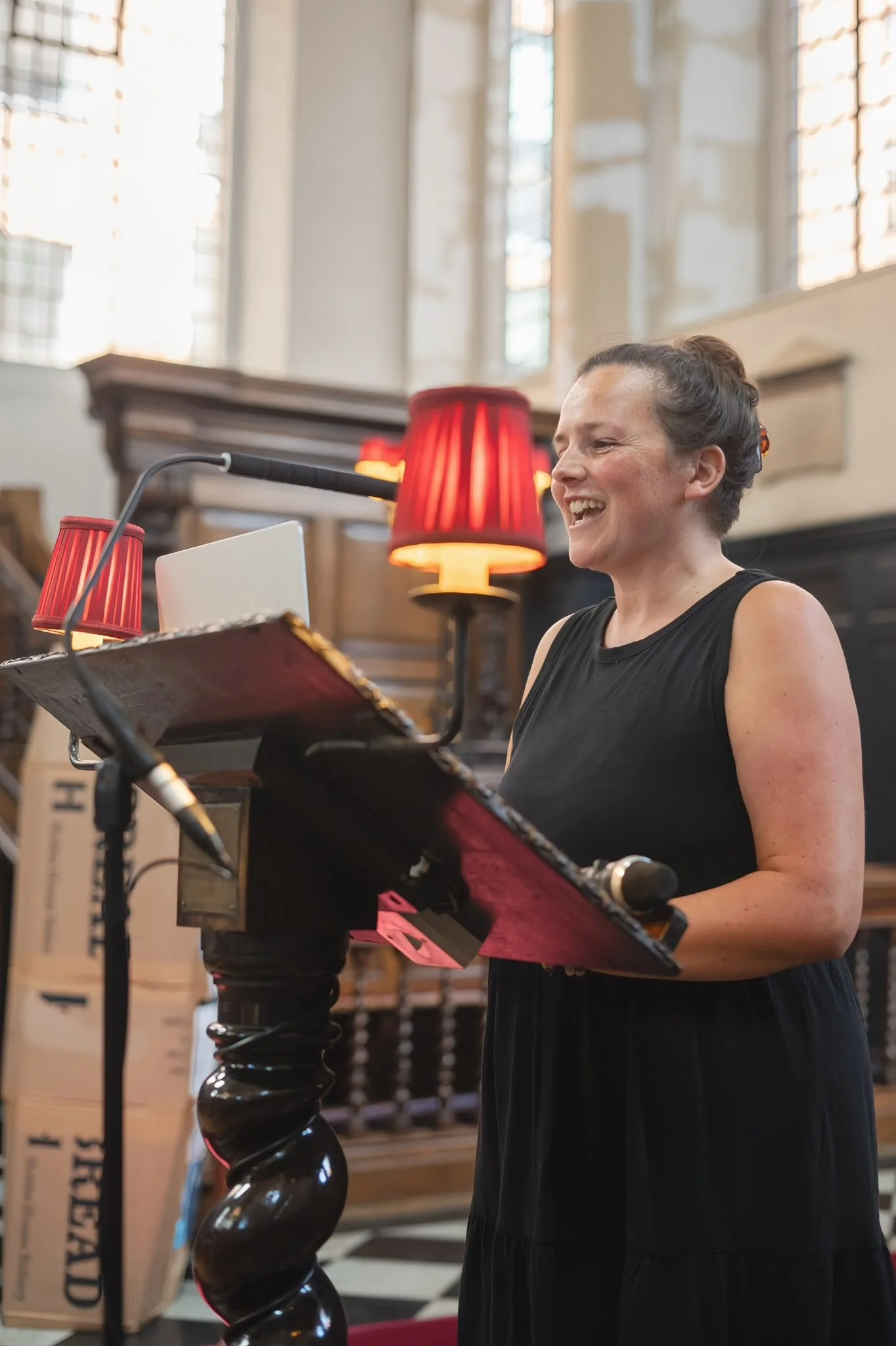
Natasha gave a reading taken from W.G. Sebald's The Rings of Saturn, first published in 1995 in German, with the English translation published in 1998.
She read an excerpt from the opening of Chapter three, where the narrator is walking along the coast path in Suffolk. He describes solitary fishermen in makeshift, tent-like shelters gazing out to the ever-changing sea, waiting for the dwindling numbers of fish to arrive.
-
This Eulogy was planned and written, but was not able to be given on the day of the Funeral due to circumstances beyond our control. Andrea’s words remind us of the millions of indigenous people globally who have had, and continue to have, their lands, resources and culture taken without their consent. It is important to not only read, but properly listen and hear her words.
Food System, today we have gathered here to mourn you. I could speak of your failures, of the extraction, of my frustration with how inexperienced you. Empty flavors, waste, monocultures, chemicals, broken supply chains. And the distance that grew between people and the land that feeds them. But I choose to remember that where I come from, in the Andes, before we speak of what wounded us, we first acknowledge what sustained us.
So, before I say goodbye, I want to say thank you.
Thank you for keeping us alive. Thank you for feeding billions of people through wars, droughts, migrations, industrial revolutions, and centuries of uncertainty. Thank you to the truck drivers who drove through the night. To the engineers who designed roads, ports, irrigation systems and storage facilities. To the warehouse workers. To the market vendors. To the farmers. To the people who worried about bananas arriving before they rotted and grain crossing oceans before it spoiled.
Few of them were celebrated. Most of them were invisible. Yet every day they carried the burden of an impossible question: How do we feed everyone?
Not someday. Today. And somehow, imperfectly, you answered.
You were not always wise. You were not always beautiful. But you kept us alive. And for that, I thank you.
Because when I think of you, Food System, as much as I wanted to see a villain, I see somewhat of an imperfect mother. A tired mother. A mother doing the best she could with the tools she had available.
Perhaps she did not always give us the most nourishing food. Perhaps she was rushed. Perhaps she was wounded herself. Perhaps she sometimes confused abundance with nourishment. But she fed us. And if someone keeps you alive, even imperfectly, gratitude is owed before criticism. So thank you.
And yet, Food System, there is another story we must tell. You were never only about food. You were also about journeys. About curiosity. About wonder. About the human desire to see what existed beyond the horizon.
Imagine tea leaving the mountains of Yunnan and finding its way into the teacups of London. Imagine vanilla leaving the forests of Mexico and becoming the scent of European desserts and perfumes. Imagine black pepper leaving the Malabar Coast of India and becoming so precious that merchants crossed oceans and empires fought over access to it. Imagine coffee leaving the highlands of Ethiopia and becoming the fuel of intellectual salons, revolutions and financial districts across Europe. Imagine potatoes leaving the Andes and quietly feeding entire nations, changing history without most people ever knowing where they came from. Imagine cacao traveling from Indigenous civilizations of Mesoamerica and the Upper Amazon to the chocolate houses of London, Paris, Brussels and Zurich.
Entire empires rose following the scent of food.
Trade routes became economic corridors. Economic corridors became geopolitical corridors. The search for spices financed empires. The search for flavor reshaped maps.
The East India Company, whose history still echoes here in Britain, was not only moving goods. It was moving civilizations. Sometimes with violence. Sometimes with greed. Sometimes with wonder. Sometimes with genuine fascination.
And perhaps all of those truths existed at the same time. Tea carried China into London. Coffee carried Ethiopia into Europe. Pepper carried India into the courts of kings. Vanilla carried Mexico into the imagination of the world. Potatoes carried the Andes into the kitchens of nations. Quinoa carried mountain wisdom into modern nutrition. Cardamom carried forest aromas into the rituals of distant peoples. And cacao carried Indigenous cosmologies across oceans disguised as chocolate.
Because food never travels alone. Food carries stories. Worldviews. Seeds. Memories. Prayers. Economies. Relationships.
Through you, entire civilizations sat at the same table before they ever learned each other’s names. From my Quechua lineage, I must also speak of what happened when these journeys arrived at our lands. Our potatoes. Our maize. Our cacao. Our quinoa. Our medicines. Our seeds. Our stories. Many things were taken without permission. Many things were extracted without understanding. Many things were valued only after they had left the hands of the people who protected them.
For a long time, I did not understand this.
I felt anger. I felt grief. I wondered why the wisdom of my ancestors was ignored while the products of their labor traveled the world. I thought of my grandmother. A farmer. A woman whose hands carried knowledge older than nations. A woman who understood seeds, seasons and soil. And yet her work was not considered prestigious. Not modern. Not valuable. As a child, I never understood why. I never farmed with her. I never fully learned what she knew. And for a long time, I blamed you.
But today, at your funeral, I understand something I could not understand before. You too were trying to survive. You emerged from a world obsessed with scale. A world terrified of scarcity. A world trying desperately to feed growing cities. A world moving so fast that it forgot many things. And while you forgot some wisdom, you also kept many of us alive. When families could no longer work the land. When communities migrated. When droughts came. When people left villages for cities. You provided food where there was no field. You provided calories where there was no harvest. You carried humanity through a difficult chapter.
And for that, I forgive you.
More than that. I thank you. Thank you for being the mother who fed us in a bittersweet way. Thank you for creating enough abundance that humanity could begin asking deeper questions.
Not only: How do we survive? But: How do we nourish?
Not only: How do we produce? But: How do we belong?
Today something beautiful is happening. The foods once dismissed as primitive are returning as treasures. Ancient grains. Native seeds. Biodiversity. Indigenous stewardship. Sacred foods. The wisdom of territories.
The world is beginning to remember.
Not because the old food system failed completely. But because it succeeded enough to give humanity something previous generations rarely had: The luxury to reflect.
The luxury to ask: What is nourishment? What is enough? What kind of relationship do we want with the Earth?
And now it is time.
In Andean cosmology, death is not an ending. Death is a return to relationship. Death is transformation. Death is reciprocity. Death is becoming part of a larger cycle.
We understand existence through three interconnected realms. The Hanan Pacha, the upper world of possibility, vision and becoming. The Kay Pacha, the living world we inhabit together. And the Uku Pacha, the inner world. The fertile darkness beneath the surface. The realm of roots, ancestors, seeds, memory, death and regeneration.
Today, Food System, we stand in the Kay Pacha. And we are gathered to accompany your descent. Not into oblivion. Into the Uku Pacha. Into the place where all things are transformed. Into the dark soil where seeds wait. Into the womb where futures are composted before they emerge. For what enters the Uku Pacha does not disappear. It changes form. There, beneath the visible world, Pachamama receives everything.
The harvest. The fallen leaf. The forgotten seed. The broken system. The empire. The dream. The wound. The gift. And with the patience of a mother, she transforms them all.
So today we return you to Pachamama.
I return your achievements. I return your mistakes. I return your abundance. I return your excesses. I return your wisdom. I return your blindness. I return your hunger. I return your generosity. May Pachamama receive all of it. May she compost what no longer serves. May she preserve what carries life. May she nourish what is waiting to be born. Because perhaps what we call a funeral is not truly a funeral. Perhaps it is a Pachakuti, the great turning of the world. A moment when what stood at the center moves to the edges. And what was forgotten begins to return.
The seeds. The soil. The farmers. The territories. The relationships. The ancestral knowledge. The understanding that nourishment is not an object alone, but a relationship. Perhaps this is not the death of the Food System. Perhaps it is just the end of One story about what we used to call food.
So that another story can begin.
A story in which value returns to territory. A story in which nourishment matters as much as yield. A story in which biodiversity and life means wealth. A story in which Indigenous wisdom is not treated as a relic of the past, but as part of humanity’s future.
Rest now, old Food System. You fed us. You carried us. You connected continents. You placed the world at one table. You helped humanity survive long enough to sit now in the comfort to afford asking better questions. And now, from your roots, something new will grow.
Sulpayki. Thank you. May your descent into the Uku Pacha be gentle. May your Pachakuti be fertile. And may Pachamama transform you into nourishment for the generations yet to come.
For in the eyes of Pachamama, nothing truly ends. It returns. It transforms. And it feeds life once again.
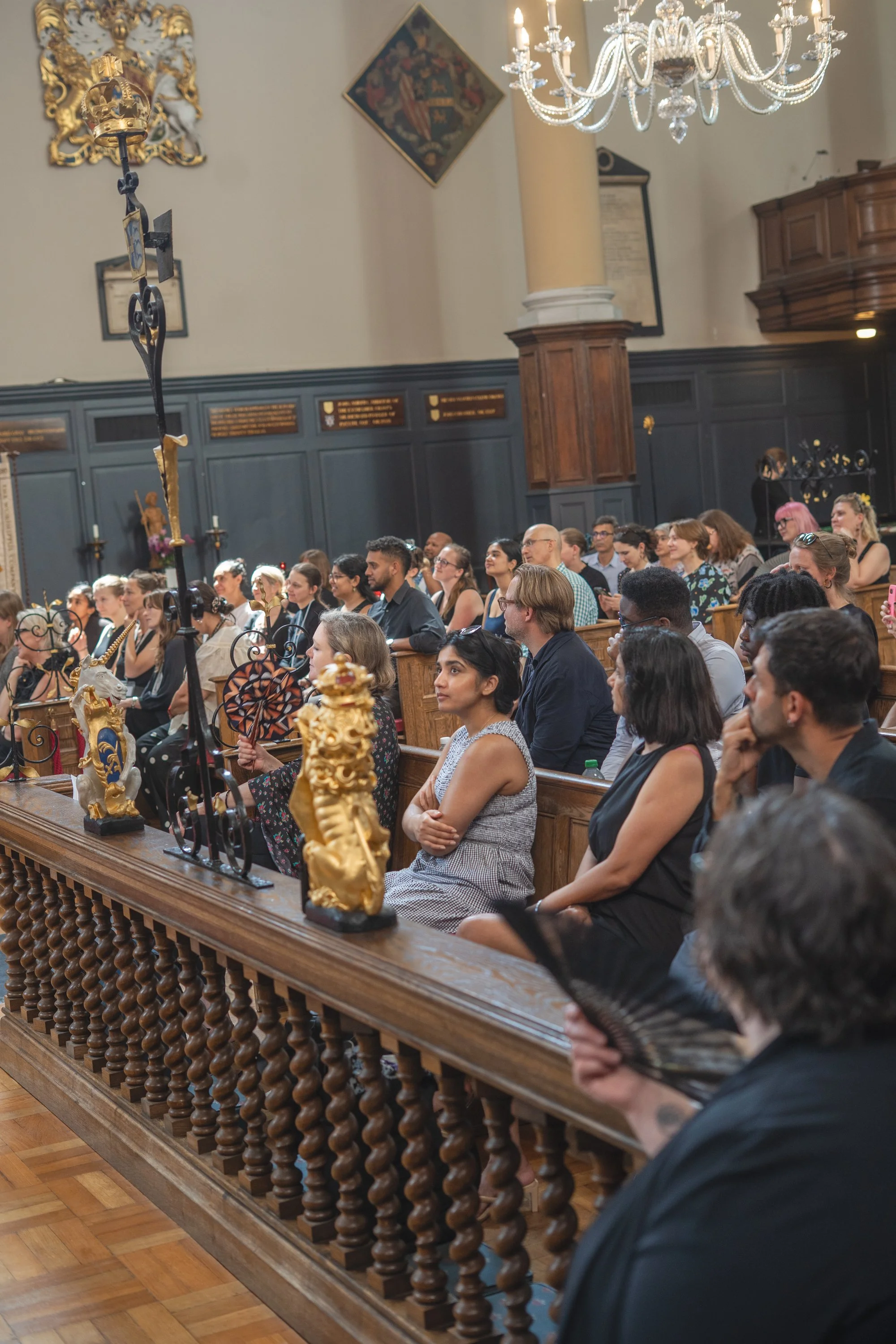
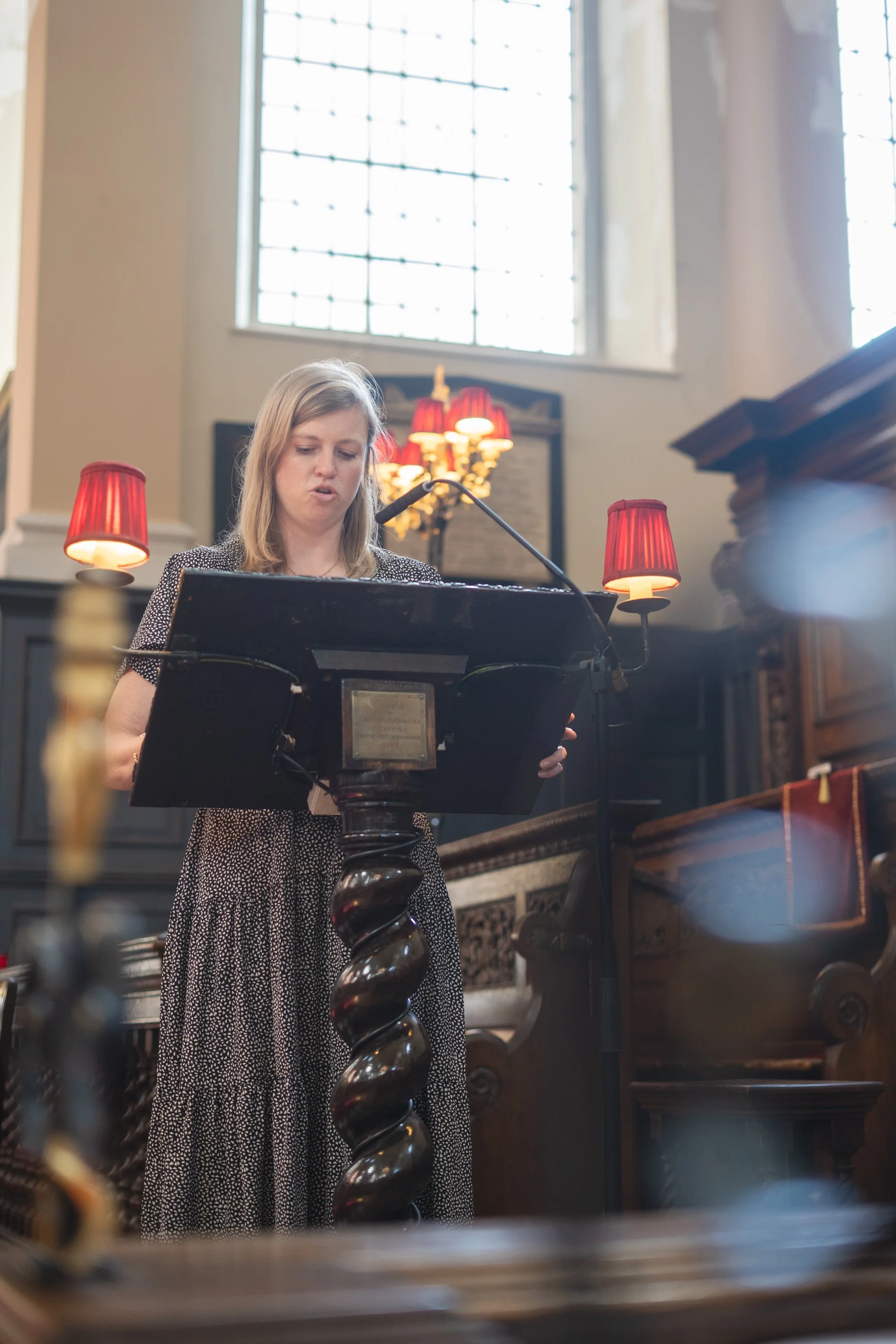
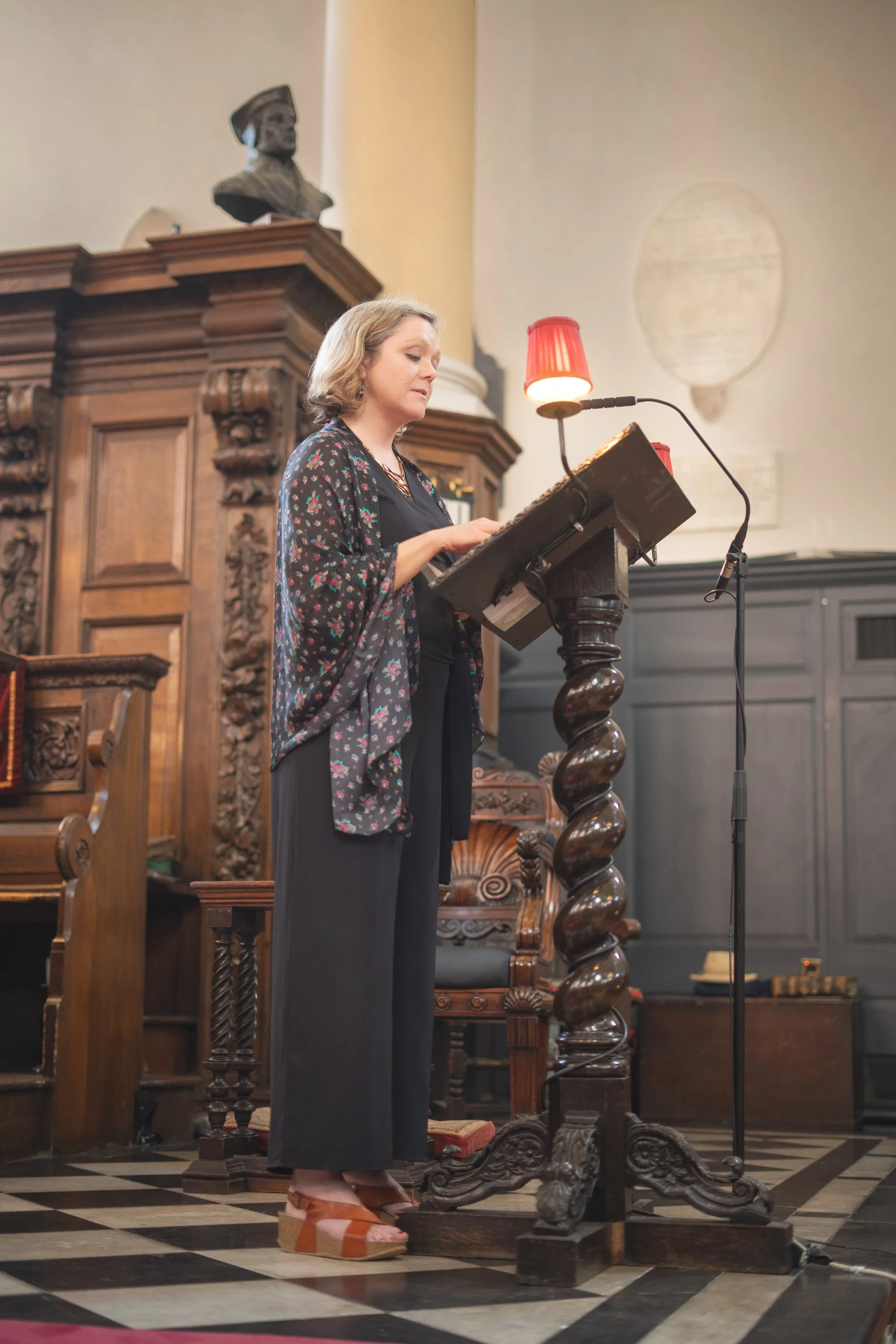
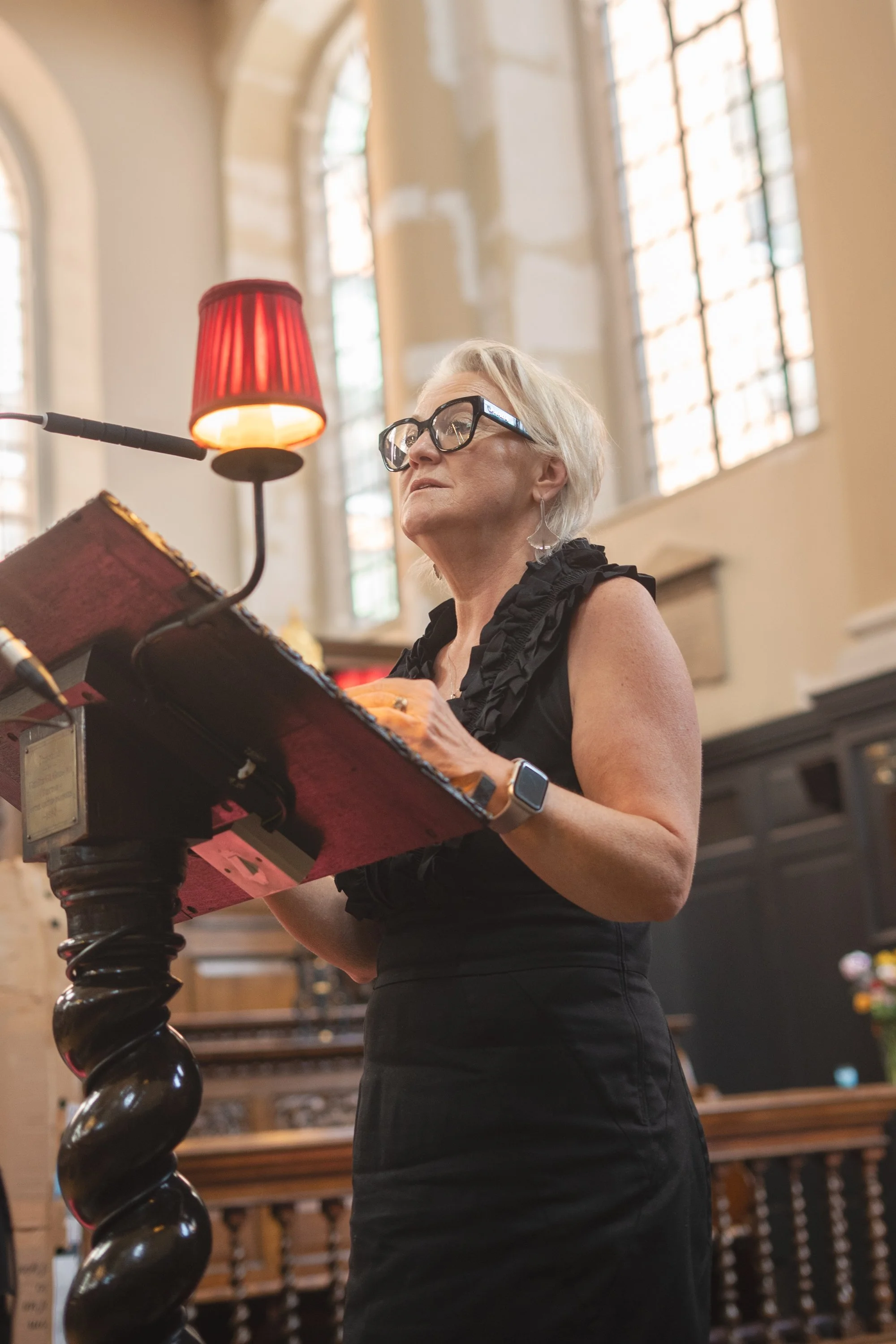
Eulogies and Readings


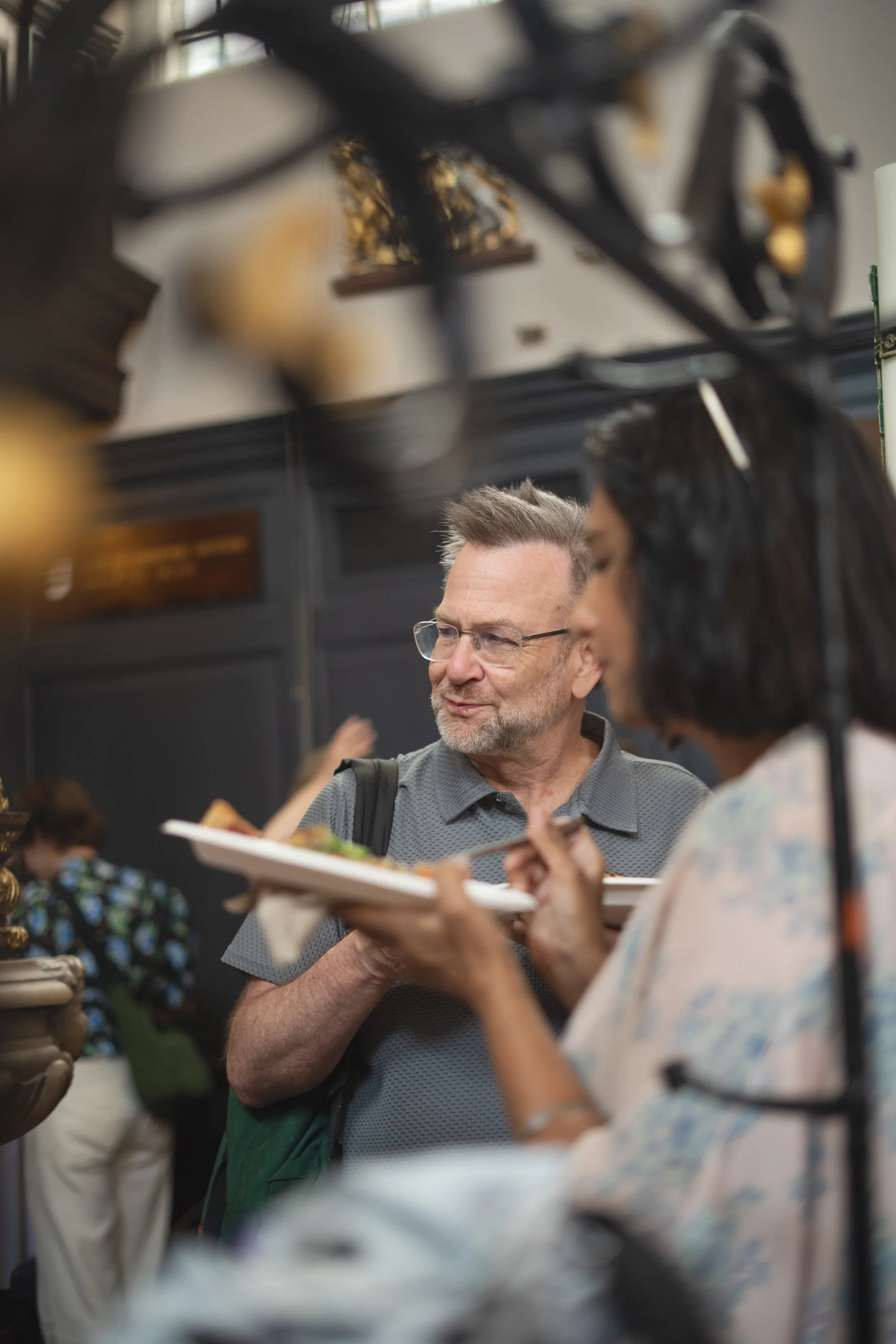
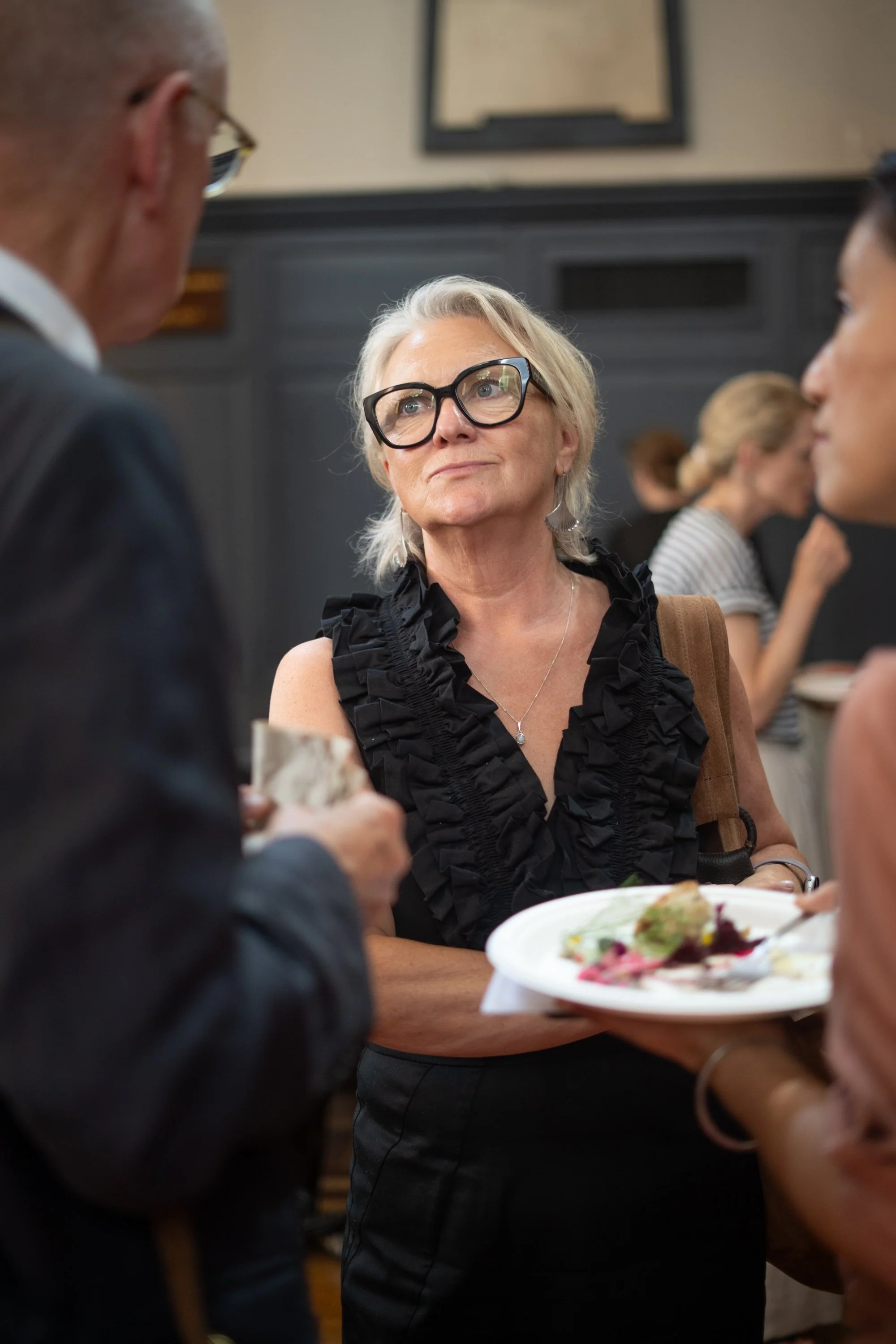
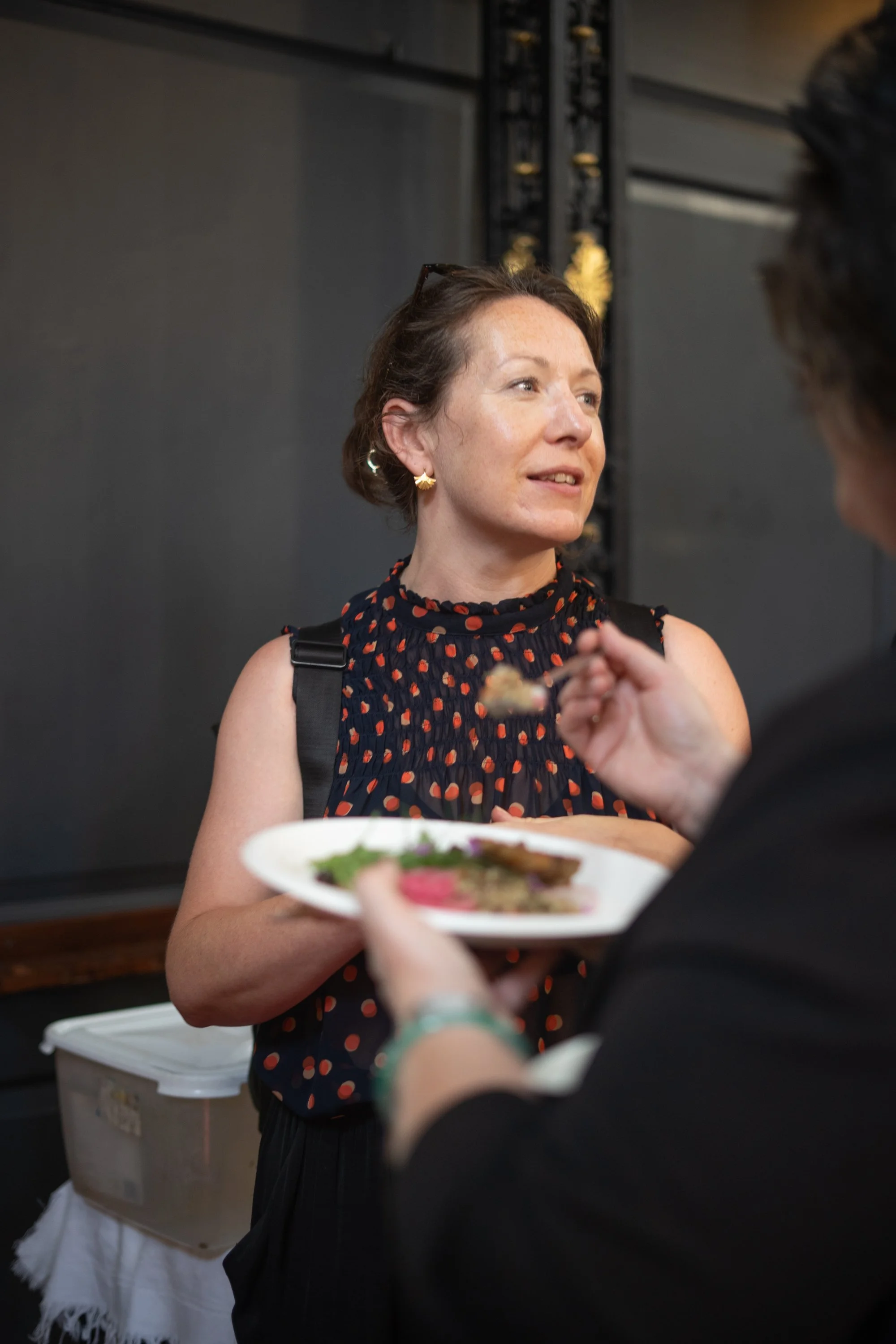
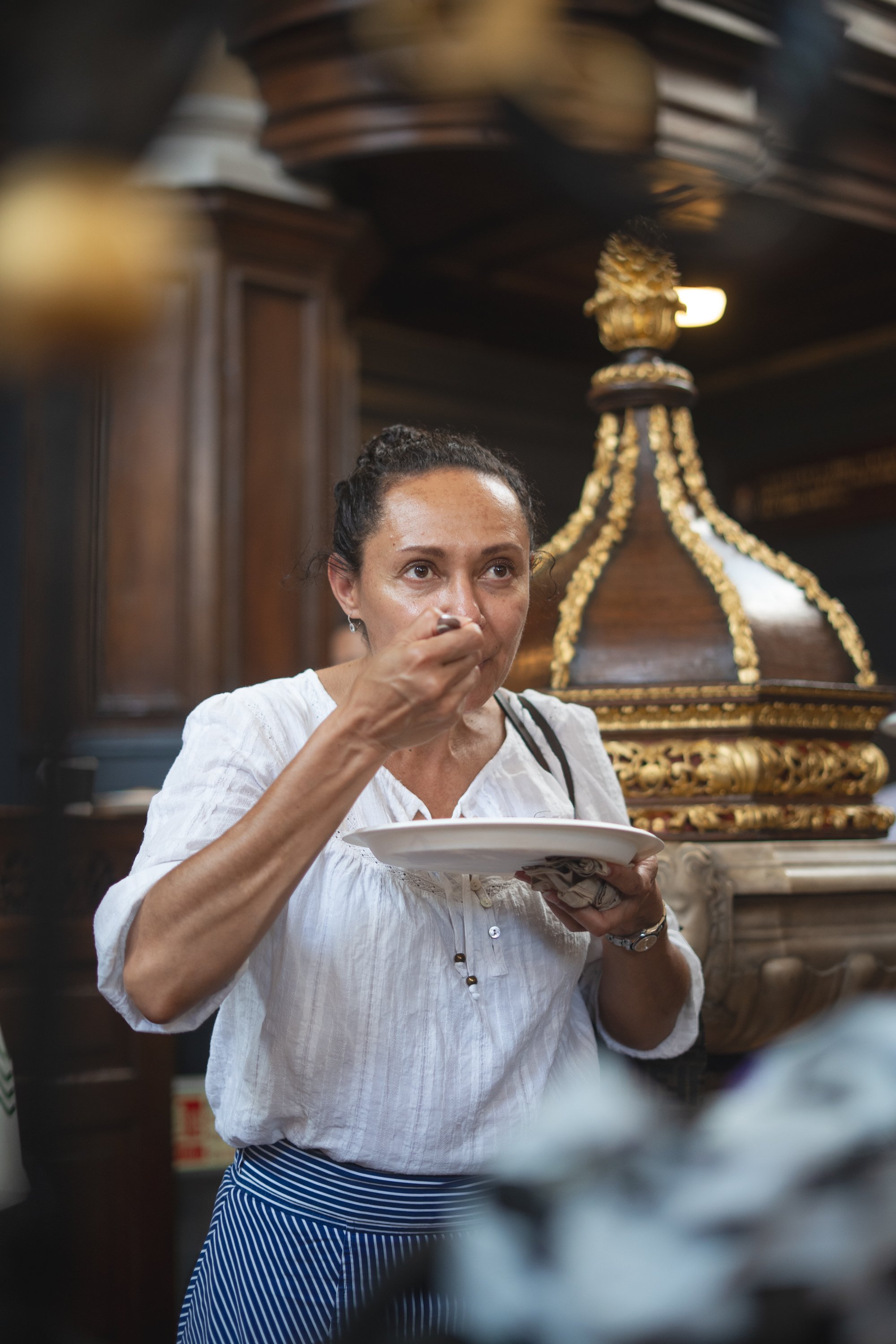
The Hopeful Plate:
reception menu and food stories
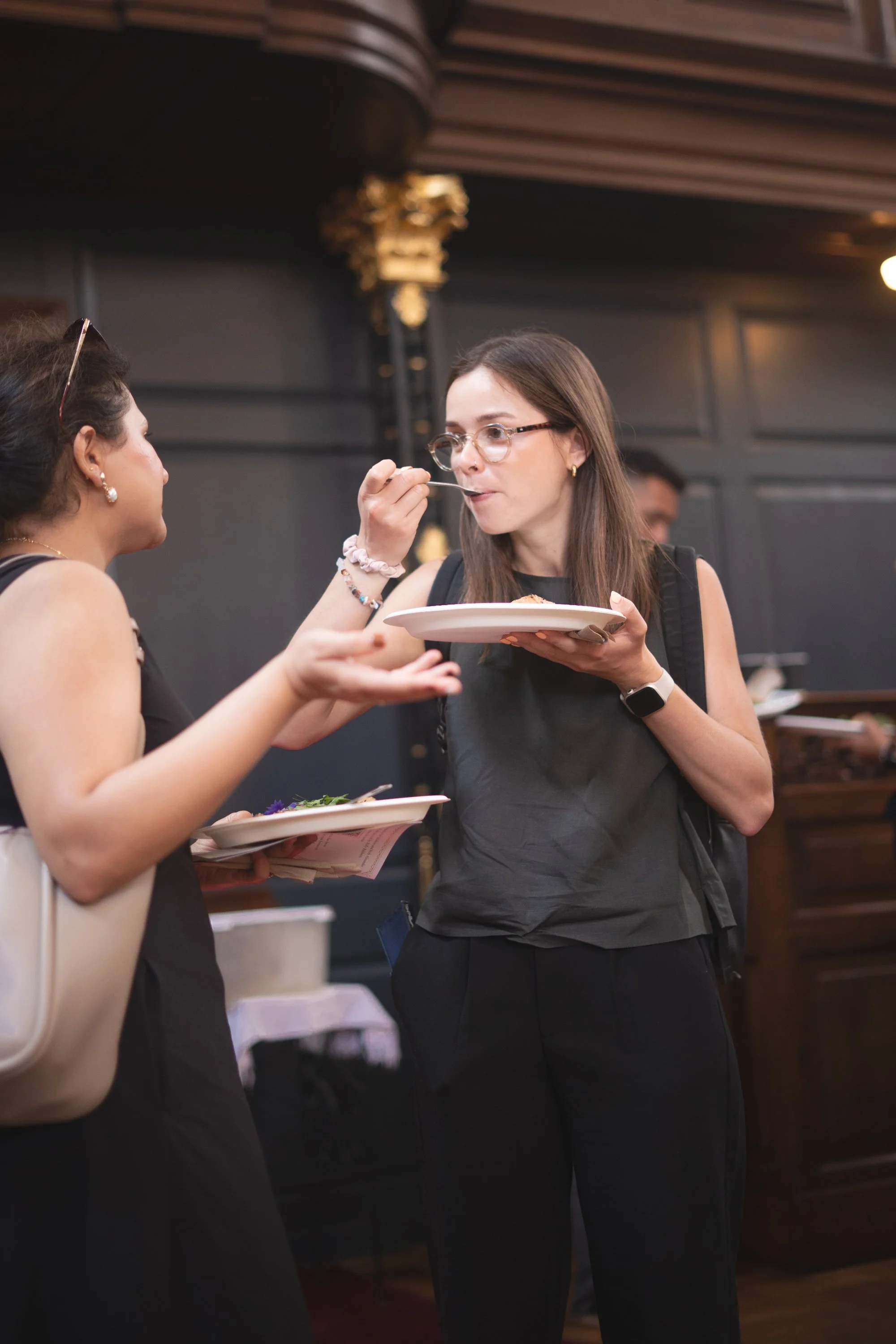
Created by Polly Baldwin and Beth Alexander
Pink Flamingo Pea & Miso Rough Puff Roll
Not your usual beige sausage roll affair, this is made with rough puff pastry using Flanders wholemeal wheat flour, grown by Jeremy Dicken at Oak Farm in Lincolnshire, and organic butter. The filling is a wonderful mix of nutty organic pink flamingo peas, grown by the Swires family at Balmakewan Farm in Scotland, herbs gathered from Beth’s garden, and miso from a little village in Japan brought back by Beth’s neighbour as a thank you for feeding their fish.
The flour and the peas were donated by Hodmedods and other ingredients collected from Mes Amis in Beckington.
Allergens: egg, milk, sesame, gluten, soya
Vegan and gluten free alternative: Herby Pea Drop Scones
Everyone should be able to ‘give peas a chance’ - these Drop Scones are made with Doves farm gluten free flour, and a delicious blend of pink flamingo peas, herbs and spices.
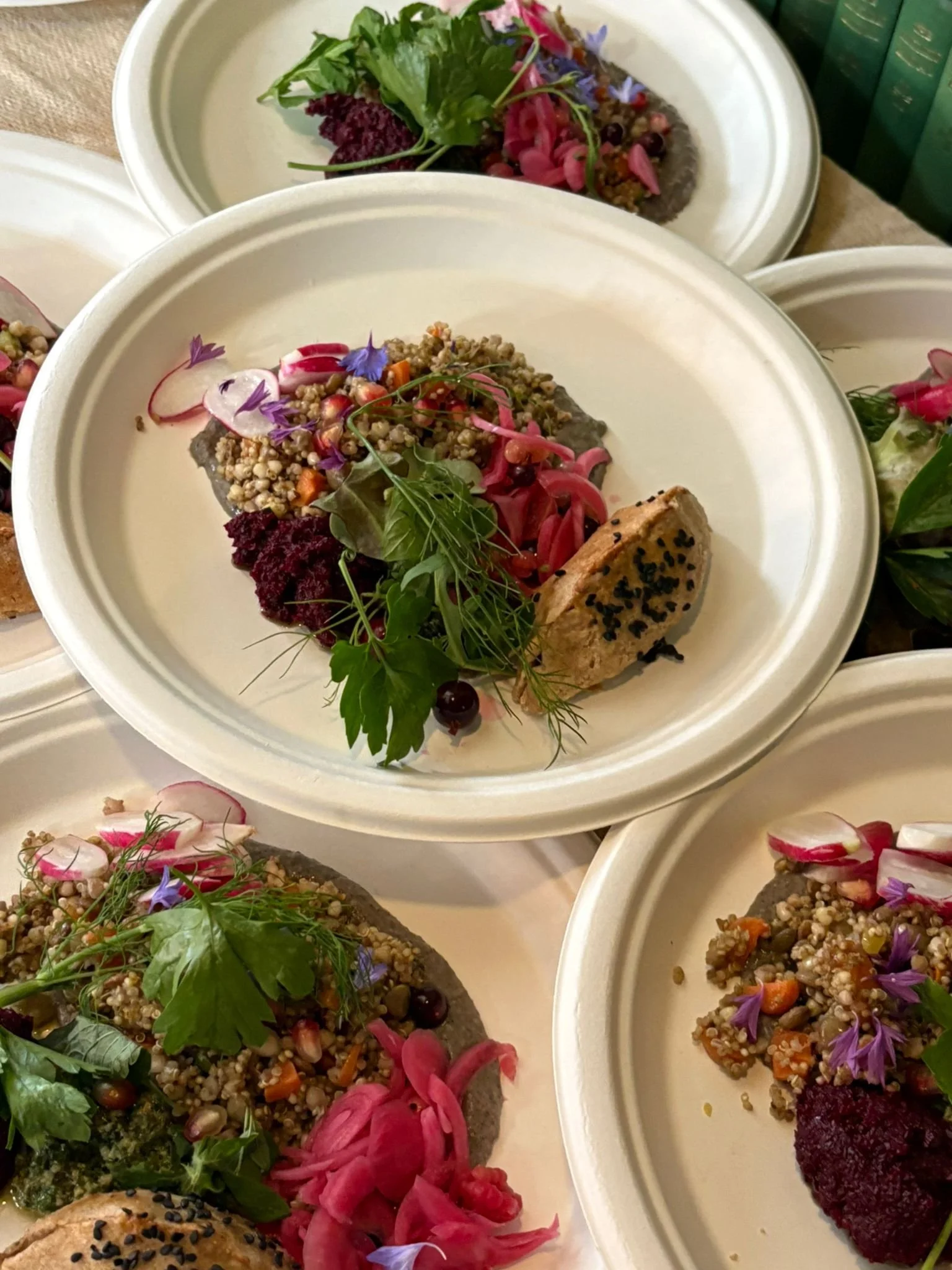
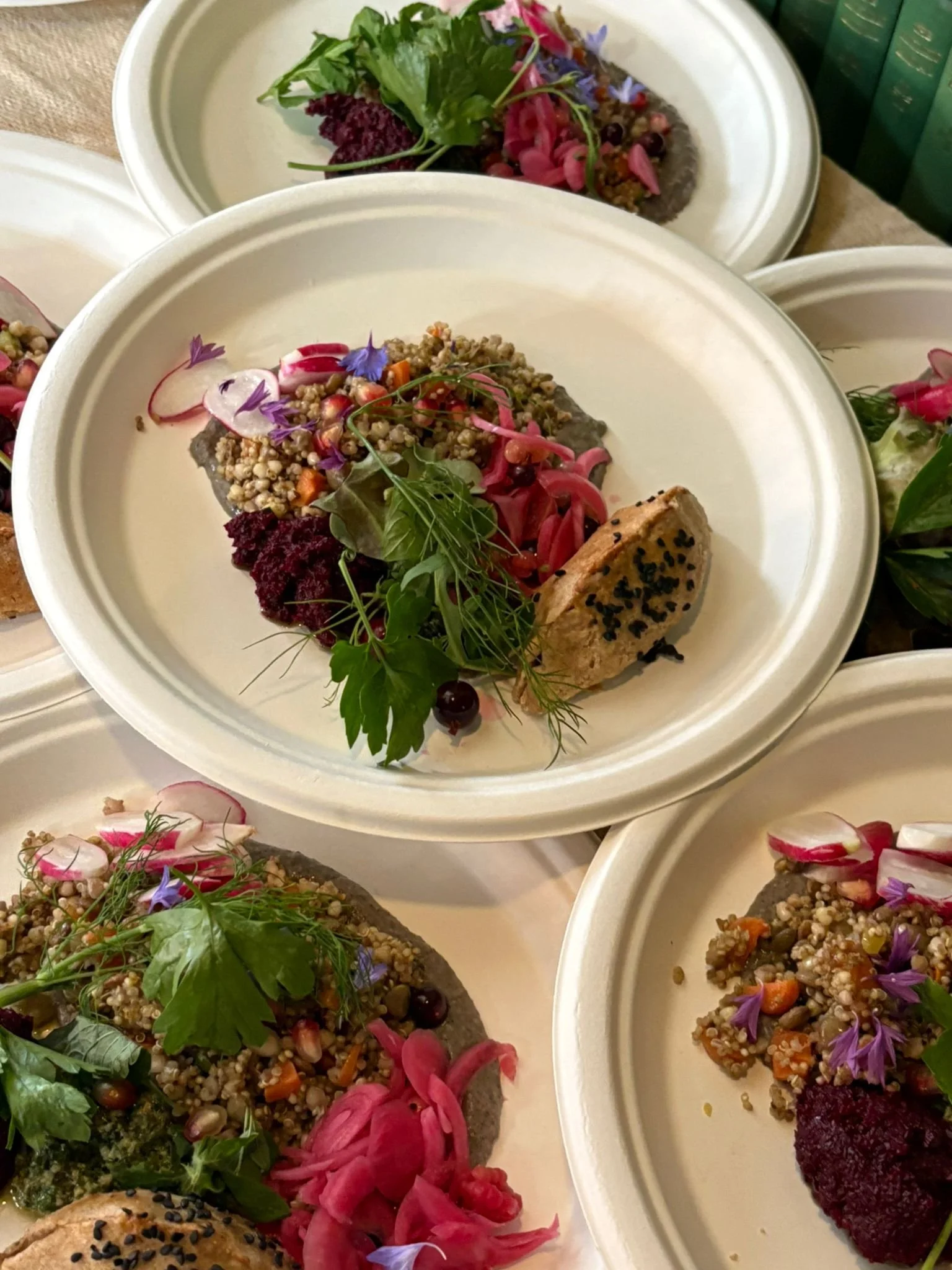
British Grains & Bean Salad with Rainbow Roast Vegetables
vegan and gluten free
Made using surplus ingredients that would otherwise have gone to waste.
All ingredients donated by Jolly Allotment.
Allergens: sesame
Smoky Roast Beetroot
vegan and gluten free
Made using a glut of beetroots
Allergens: sesame
Beany Houmous with Loads of Herbs
vegan and gluten free
Organic Butterbean, red kidney and cannellini beans smooshed together, and made delicious with extra herbs and onions.
Allergens: sesame
Pickled Berries & Red Onion
vegan and gluten free
A beautiful pink pickle made with red onions, flavoured with cardamom, cinnamon and star anise, then made extra special with a glut of raspberries, gooseberries and currants from Beth’s allotment, plus wild strawberries from the garden.
All the Greens Garden Pesto
vegan and gluten free
A heady mix of oregano, lemon balm, tarragon and other green edibles, bulked out with bolted spinach from Kate at Grown Green near Bradford on Avon, and blitzed with lots of lemon, toasted seeds, garlic and Palestinian extra virgin olive oil.
Jolly Tea
Polly’s Jolly Allotment tea includes Ginger, Cinnamon, Cardamon, Clove, Star Anise, Lemonbalm, Liquorice Root, Rose and Chamomile.
To enjoy with your Jolly Tea…
Berry Blondies
gluten free
Made using organic butter and eggs and lots of plump berries and jam.
Allergens: egg, milk, sesame
Sunflower & Black Sesame Amaretti
vegan and gluten free
Simple but moreish little bites, effortlessly vegan and gluten free, made with ground organic sunflower seeds and black sesame seeds, with a hint of orange. The seeds are bought in bulk in Beth’s local refill shop run by a lady called Christine Giles who goes above and beyond to source ethical ingredients for her customers.
Allergens: sesame
Suppliers